Showing posts with label Diabetes. Show all posts

Wednesday, 2 January 2013

Exercise for Diabetes

An active lifestyle can help you control your diabetes. Follow these basic guidelines for safe exercise:
• Start slowly and build up your energy level, especially if you have not exercised much in the past.
• Aim for at least 30 minutes of exercise each day. You can meet this goal by exercising in 10-minute blocks of time if you need to.
• Make exercise enjoyable by walking with a friend or family member.
• Make exercise a part of your daily routine
• Do what you are able and what you enjoy
• Walking is one form of exercise that almosteveryone can do.
• The best time to exercise is 1-2 hours after a meal. Check your blood sugar before you begin.

Saturday, 29 December 2012

Diabetes Diet


Eat Healthily


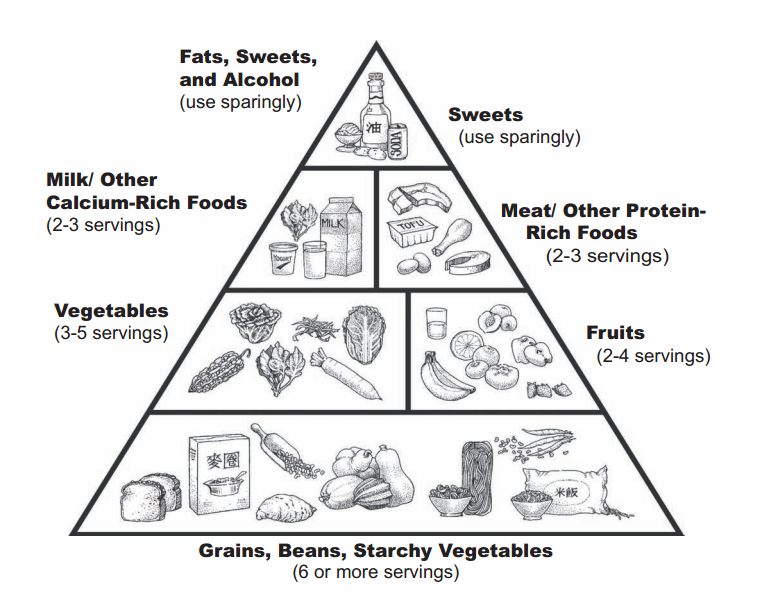
Protein-rich foods include beef, pork, chicken, and fish, beans and legumes, eggs, tofu, and nuts. Cook meats in low fat ways: steam, grill, stir fry, roast, broil, or bake meats. Trim excess fat before eating. Beans and legumes are low in fat and high in fiber and are good substitutes for higher fat meat products. Limit high fat meats such as sausage, fried chicken and shellfish. Cook with small amounts of fat. Use olive oil for low-heat cooking and canola oil for higher heat stir frying.
Calcium-rich foods include low fat or non-fat cow’s and goat’s milk, yogurt, and cheese. Non-dairy sources of calcium include broccoli, firm tofu that has been calcium-set (read the label), fortified soy and rice milk, and leafy greens such as collards, bok choy, kale, and chard, and dried fish.

Starchy foods have the greatest impact on blood sugars. They include rice, noodles, bread, cereals, and starchy vegetables such as potatoes, yams, sweet potatoes, corn and beans. Choose whole grain bread, cereals, and noodles when possible. Eat high fat and sugar foods such as pastries, biscuits, chips and other fried snacks less often. 
Healthy fats and oils include olive, canola, and peanut oil. These fats are actually protective for your heart and help raise your "good" cholesterol, or HDL. But fats and oils are high in calories and so it is a good idea to limit the amoun.
Non-starchy vegetables such as broccoli, carrots, bok choy, and other greens are low in carbohydrate and sugars. Eat a variety of these vegetables. Steam or stir fry to retain vitamins. Use small amounts of oil.
Salt and salty foods can raise blood pressure. Soy, oyster, and fish sauces (patis) are very high in sodium. Try to slowly decrease the amount you use to prepare and season food. Increase the amount of other non-salty seasonings you use such as ginger, lemon.
Whether or not you can drink alcohol safely with your diabetes is an important matter to discuss with your doctor.  

Living With Diabetes

Living with Diabetes: Food and Physical Activity
Healthy eating, exercise, and weight management are important ways to control sugar level. Managing weight and eating right are needed to control cholesterol (blood fats) and lower blood pressure.
Eating for Health
Basic guidelines for healthy eating include:
• Eat a variety of foods from the different food groups every day so as to get vitamins and minerals that are needed for health.
• Eat at least 3 times each day.
• Eat about the same amount of food each day.
• Eat at about the same time every day.
• Try not to skip meals or snacks. Skipping meals may lead to overeating later. Skipping meals may also lead to low blood sugars.
• If you want to lose weight, cut down on the amount of food or your portion size.
• Eat high-fi ber foods, such as fruits, vegetables, grains, and beans.
• Use less added fat, sugar, and salt.
Foods that contain carbohydrate and other sugars have the greatest effect on your blood sugar. Control how much carbohydrate you eat at each meal. One cup of rice or noodles, a small potato or sweet potato, or 1 cup of cooked taro is a good serve sizing size for most people.

What Diabetes Patients Should Know?

1. What is Diabetes?
Diabetes is a condition where the body does not produce or properly use insulin which has the function of helping the body use sugar for energy.
For people who are suffering from diabetes,their body is unable to use intake sugar and then the sugar stays in the blood stream. As a result, high sugar level occurs.
2. Blood Sugar Monitoring
People with diabetes should check their blood sugar at home, which is necessary for them to understand how to control diabetes through exercise and healthy eating. It is important to check blood sugars so as to prevent either hyperglycemia or hypoglycemia. Knowing blood sugar better is also helpful for patients to discuss their diabetes with doctors so as to plan your care.
3. Hypoglycemia and Hyperglycemia
Hypoglycemia means that your blood sugar is too low. Symptoms of hypoglycemia
are shakiness, dizziness, hunger, sweating, irritability, anxiousness, and even
blurred vision. It may result from too much medication or insulin, too little food,or too much exercise. If your blood sugar is 70 or below, you should follow the 5:15 rule: eat about 15 grams of carbohydrate, wait 15 minutes, test your
blood sugar, and then repeat until your blood sugar is above 80. 15 grams of
carbohydrate is found in a half glass of juice or regular soda, 3 glucose tablets, or a cup of nonfat cow’s milk.
Hyperglycemia means that your blood sugar is too high. The symptoms of
hyperglycemia are frequent urination, extreme thirst, sleepiness,headache, and
hunger. Hyperglycemia is usually the result of too much food, too little insulin or other diabetes medication, illness, or stress.
4. Illness and Stress
Illness can cause blood sugars to be abnormally high or low. If people are ill, it is important to check blood sugars more often and tell their doctor. If people  are vomiting and unable to keep food or fluids down, they'd better contact their
provider immediately.
Stress can also raise blood sugar. Stress can be caused by family problems,work, money difficulties, loneliness, death or divorce, and other major life changes. Eating a healthy diet and getting plenty of exercise can help relieve stress. Depression is more common in people with diabetes than in the general population. Depression and sadness can be normal parts of life, but if it continues and interferes with your ability to interact with family, work, and friends, it is important to seek help.

Wednesday, 5 December 2012

Why Diabetes Is So Terrible? (Ⅱ)


In last century nineties, US and UK researchers showed that Intensive Insulin Therapy can decrease the risk of getting diabetic nephropathy. According to their research, among 3898 patients, their risk of getting diabetic nephropathy is decreased 33% after Intensive Insulin Therapy. This news really make diabetes patients excited and such therapy is becoming common at that time. Most patients said they have seen the hope for them.
However, if we analyzing more carefully, we can know that only 13 to 16 patients will not have microalbumin urine after Intensive Insulin Therapy, but 34-37 diabetes patients will still get diabetic nephropathy finally because 56-60 patients will not benefit because even they do not have this therapy, their diabetes will also not get to diabetic nephropathy. Therefore, many patients will begin to thinking that which part that I am belonging to.
As for diabetes, Intensive Insulin Therapy required to control sugar level at a very strict level. To be honest, it is really difficult. Hypoglycemia can be found at any timer, which makes patients have to bear more. Besides, frequent test and strict diet is also required at the same time. However, according to UK researchers, even patients can control sugar level well, there are still part of patients can get diabetic nephropathy. What’s worse, there are many externally stimulating factors in our living environment.
Since patients can not know which part of patients they are belonging to, a positive and early treatment is needed in order to prevent further damage. However, I think many patients would like to try alternative treatment since they also know that insulin can also not make them feel totally comfortable.

Tuesday, 4 December 2012

Why Diabetes Is So Terrible? (Ⅰ)


According to the statistics, there are more than 150 million diabetes patient in the world and in China there are more than 30 million in China which is next only to India. Besides, there are a equal number amount people are on the borderline of diabetes. Many people who have lower sugar tolerance can turn to diabetes at any time. What’s worse, as estimate, the population of diabetes patients in the whole can be double in ten years. There is another main viewpoint which is from the World Diabetes Day, that is ‘Diabetes will make your kidney pay the price’. I think here the price does not only mean the health kidney, but also refers to the economic loss.
Nearly 95% diabetes are type 2 diabetes and 40% to 50% type 2 diabetes can be found microalbumin in urine test after being diagnosed, and among them, 20% to 40% patients can progress to obvious diabetic nephropathy. For example, in China, end stage diabetes nephropathy patients occupy 10% among the patients who are taking dialysis. In Taiwan, the number is 26%. What’s worse, patients who are having diabetic nephropathy also have a high risk of cardiovascular disease, or even death. As a result, their living quality also decreases too much.
Based on the numbers, diabetes patients who are complicated with kidney disease have to pay 13 times money on treating the disease than others who do not have complications. Such financial pressure is too depressing. Once the disease gets to uremia stage, the cost is also too much higher. Even spending such high medicine expense, their living quality is still much lower than others.

Monday, 3 December 2012

New Viewpoint in Treating Diabetes

We all know that diabetes patients have to take many medicines to control their sugar level in order to prevent various complications, However, why so many people still have many complications even their sugar level is controlled well?
To be honest, there is a big misunderstanding among too many patients who are suffering from type 1 diabetes. Normally, they think only controlling sugar level well is already enouth. However, according to our many years clinical experience, it is far from enough by controlling sugar only. We should know that type I diabetes is a kind of autoimmune disease, which cause injury to beta cell. As a result, pancreas can not secret enough insulin, and then sugar problem appears. We say it is not enough to control sugar only because there is not only sugar metabolic disorder, but also the lipometabolism disorder and protein metabolic disorder. All the final products of the three metabolic disorders can cause damage to our body. It has been proved by the research of the WHO that the more the three substances engender, the more serious the complication of the diabetes will be.
From the above we can find that only controlling sugar level well does not mean treating diabetes well. This is also the reason of complications appearance. In this case, the aim we treat the diabetes should not be only confined to controlling the blood sugar, but also adjust the lipid metabolic disorder and protein metabolic disorder. Only in this way, diabetes can be treated well, and the possibility of getting complications can be reduced.

Sunday, 29 January 2012

Common Treatment for Complications of Diabetes(Ⅱ)

Peripheral neuropathy
An early treatment is helpful to relieve the slow transmit of motor caused by diabetes. If patients have neuralgia, they can try carbamazepine tegratol which can stop the pain in a short time. Besides, they can also take amitriptyline or fluphenazine.
Diabetic retinopathy
Clofibrate is commonly used and about 43.5% patients can get improved eyesight and 15% patients can have decreased cholesterol level. Patients who have Platelet Aggregation can use aspirin, but the final treatment effect still has controversy. In recent years, ARI is also used to treat cataract and ocular fundus lesion. Besides medication, photocoagulation is also adopted to treat diabetic hemangioma capillanisum, stopping bleeding in retina. Photocoagulation can be divided into local and broad, which should be chosen according to the illness condition. In order to remove the blood stasis and fibrin, vitrectomy or vitreolysis may also be suggested by doctors.
Diabetic Foot
Diabetic Foot is mainly caused by the Peripheral neuropathy and blood vessel angiopathy in lower limb complicated by local pressing. The same as other kind of chronic complications, prevention is more important than the treatment. Diabetes patients should pay more attention on protecting their foot. For example, they can wash their foot with warm water at 50~60℃ and use soft towel to dry the foot. Besides, avoiding local pressing and injury as well as infection is also very important. Soft socks and comfortable shoes is also important. Before wearing shoes, patients should check carefully whether there is hard things in shoes. If necessary, they can also choose special shoe-pad in order to reduce local pressure.

Common Treatment for Complications of Diabetes(Ⅰ)

The greatest severity of diabetes is not the disease itself, but its various kinds of complications. Since where there is blood vessel, there is diabetes.
Cardiovascular Problem
As for Diabetes patients, besides controlling blood sugar closely, early and timely measures for various cardiovascular problems are also very important. Hypertension is more common and patients must consider about the medicine effect on the metabolic action of sugar, fat, potassium as well as calcium when they are choosing medicine for their high blood pressure. For example, Potassium losing diuretics or thiazides as well as calcium channel blockers can decrease the amount of potassium and calcium entering β cells, which can inhibit the release of insulin, leading to blood sugar increase. Contrarily, potassium sparing diuretics and ACE can inhibit the secretion of aldosterone, causing less potassium discharge, which is easy to affect heart function for renal insufficiency patients who are complicated with hypertension due to high potassium level. β adrenergic blocking agents, no matter selective or nonselective, can control low blood sugar, increase blood triglyceride and decrease HDL2-ch. Some patients who have Acute Myocardial Infarction, heart failure or cerebrovascular accident are easy to get ketosis, and fast effect insulin should be injected in small dosage for several times per day under such condition. According to clinical observation, when controlling diabetes and hypertension, Coenzyme Q10 and the second generation of calcium channel blockers can be taken. Besides, 1-carnitine can improve Cardiac Muscle Function. Patients can also have a try.
Kidney Problem
Diabetes patients are always suggested to have the test for microalbumin in urine, which is helpful to find the early kidney damage caused by diabetes. If diabetes patients are tested out abnormal microalbumin, their diabetes have already affected their kidney function. In this stage, no matter they have hypertension or not, ACEI can reduce the amount of protein in urine. According to the blood pressure level, captopril 12.5 to 25mg for 2 or 3 times per day, or enalapril 5mg for 1 or 2 times per day can be taken to control blood pressure. Such medicines can not only have effect on urine protein, but also can decrease the UTRF and UET, which is due to the special effect of ACEI on the circulation of nephron which refers to dilating efferent arteriole in higher degree than afferent arterioles, thus reduce the inner pressure of glomeruli, reducing protein in urine.

Monday, 16 January 2012

Which Group of Diabetes Patients Is Not Suitable to Take Exercise?

1. Patients who have acute and serious complications, such as acute infection, fever, diabetic ketoacidosis, vomiting, diarrhea, etc.
2. When patients’ blood sugar level is higher than 16.7mmol/L or their sugar level is not stable, they’d better not physical exercise because exercise can increase sugar level and lipolysis, which can worsen illness condition.
3. Patients who are also suffering from serious kidney problem should avoid physical exercise because physical exercise can aggravate proteinuria, making kidney problem progressing further.
4. Diabetes patients should take physical exercise under doctor’s advice closely if they have serious high blood pressure or ischemic heart disease because exercise can burden heart, causing angina pectoris or myocardial infarction.
5. Excessive physical exercise can increase the possibility of fundus hemorrhage and eyeground pathological changes for diabetes patients who are suffering from eyeground pathological change at the same time.

Tuesday, 10 January 2012

Three More and One Less for Diabetes Patients

1. More urine. With high blood sugar increase, more sugar will be discharged out of body with urine, thus causing urine osmotic pressure increasing, which affects the reabsorption function to water of renal tubule. More water is discharged out of body with sugar through urine and then urine volume increases. Urine volume and times increases obviously, and some patients may even have urine volume at 3 to 5 liter, or even high to 10 liter.
2. More drink. More urine is discharged out of body and as a result the water in body also become less, so patients will feel thirsty and they have to drink more to relieve their thirsty. Therefore, the reason for more drink is caused by more urine volume everyday. With sugar level controlled well, urine volume will also become normal gradually, and then patients will not feel thirsty and they do not need to drink more. As for diabetes patients, they’d better not to limit their water intake in order to avoid more urine before blood sugar is controlled.
3. More food intake. Due to lack of insulin, glucose can not be used fully and it will be discharged with urine. Under such condition, all body organs are in the condition of lacking sugar. In order to provide enough sugar and maintain normal life activity, patients will feel hungry and then they will take more and more food. However, with more food being taken, sugar level will also increase accompanied by increasing urine volume.
4. Losing weight. Sugar can not be used fully and it can not maintain normal body activity. In order to relieve this problem, more and more protein and fat will be consumed. Plus losing water with urine, patients will have weight lose as well as fatigue and marasmus.

Sunday, 8 January 2012

Severity of Diabetes

Most people do not think Diabetes is so serious and they also do not have a clear idea about the severity of Diabetes. Instead, they think if they control their diet or take some medicines, the disease will not be so terrible. However, according to clinical observation, the severity of Diabetes is much higher than other kind of disease due to its complicated complications. We always say ‘where there is blood vessel, there is Diabetes’, which indicated that what diabetes affects is not only the high blood sugar level, but also all parts of patients’ body because blood vessel is full of each part of our body.
1. Diabetic ketoacidosis (DKA), diabetic hyperosmotic coma, hypoglycemia coma are common but critical complications of diabetes.
2. Nearly 85% diabetes patients are dying from heart disease, and more than 40% patients will be complicated by high blood pressure at the same time. Most of the time, controlling blood pressure is more important than controlling sugar level.
3. About 40% diabetes patients will have kidney problem. About one third renal failure is caused by diabetic nephropathy. Under such condition, an early treatment is really necessary.
4. Diabetic Retinopathy or diabetic eye disease can make patients feel blurred vision. Their eye sight decreases or even they may lose their sight, which is one of the four main reasons of atraumatic blindness.
5. Diabetic peripheral neuropathy always makes patients feel pain on their limbs or even the whole body, which not only reduces living quality, but also induce diabetic foot (DF). What’s worse, diabetic foot is likely to cause amputation or even cause danger to life. Besides, the treatment for diabetic foot is also difficult.
6. Lacumer Infarction which always occurs repeatedly is common brain pathological changes for diabetes patients and patients always have the symptoms of poor memory, dizzy or dementia, etc.
Besides, diabetes patients have lower immunity than others, which makes them are easy to get phthisis.

Saturday, 7 January 2012

What Is Diabetes?

Diabetes is caused by the reaction of both genetic factor and external environment factors which result in insulin secretion defect and (or) biological function decrease. It is a kind of metabolic disorder, characterized by high sugar level in blood. Chronic high blood sugar can cause damage to all body organs, especially to eye, kidney, nerve, heart, etc.
About 20% to 30% Diabetes patients have family history. No matter type 1 or type 2 diabetes, genetic predisposition is obvious, but the genetic predisposition of type 2 diabetes is more obvious than type 1 Diabetes.
Most Diabetes patients are worried that whether their disease will regenerate into their next generation. Actually, not all descendents of diabetes patients will get this disease. If both of parents are having diabetes, their children may have 5% possibility to get this disease, and if only one of parents have diabetes, the possibility will be also lower.
Among Diabetes patients, what is inherited is not the disease itself, but the suspectable Factors of diabetes. The main reason that caused diabetes is unhealthy life style.